
Why Drainage Matters This Winter
NOAA’s outlook favors a wetter-than-normal winter in Southern California with a strong El Niño. Good drainage protects your foundation, walls, patio and landscaping when heavy rain arrives all at once.French Drain and Yard Drainage Services
French Drains
Gravel-filled trenches with perforated pipe that collect and redirect groundwater.Trench Drains for Driveways
Linear channel drains at the garage or the bottom of a sloped driveway.Yard Drainage & Grading
Re-sloping, catch basins and downspout tie-ins to move water off the lot.Retaining Wall Drainage
Drain rock, pipe and weep holes behind new and existing walls. Retaining & seating wallsPermeable Pavers
Driveways and patios that let water soak in. Paver patios & drivewaysPool Sub-Drains
Drainage below pool structures, like the sub-drain we installed on a Newport Beach project.Trench Drain Installation
A trench drain is a long, narrow channel with a grate, set flush in concrete or pavers to catch water running across a hard surface. We install trench drains at garage doors, along patios and at the low end of sloped driveways, and tie each one to a safe outlet. We size the channel and grate for the rain and traffic it has to handle.Trench Drain vs. French Drain
A trench drain catches surface water across a hard surface like a driveway. A French drain collects water in the soil, underground. Many yards need both. We’ll show you where each one goes in your free design rendering.Driveway Drainage
If water pools at your garage door or runs down the driveway toward the house, the fix is usually a trench drain, a regraded slab or permeable pavers. We can add a drain to an existing driveway by cutting a channel, or build drainage into a new paver, cobblestone or concrete driveway from the start. The Dana Point project below shows a trench drain built into a new cobblestone driveway.Recent Project: Driveway Trench Drain in Dana Point
A linear trench drain along a new cobblestone driveway carries water away from the garage and the house. See the Dana Point project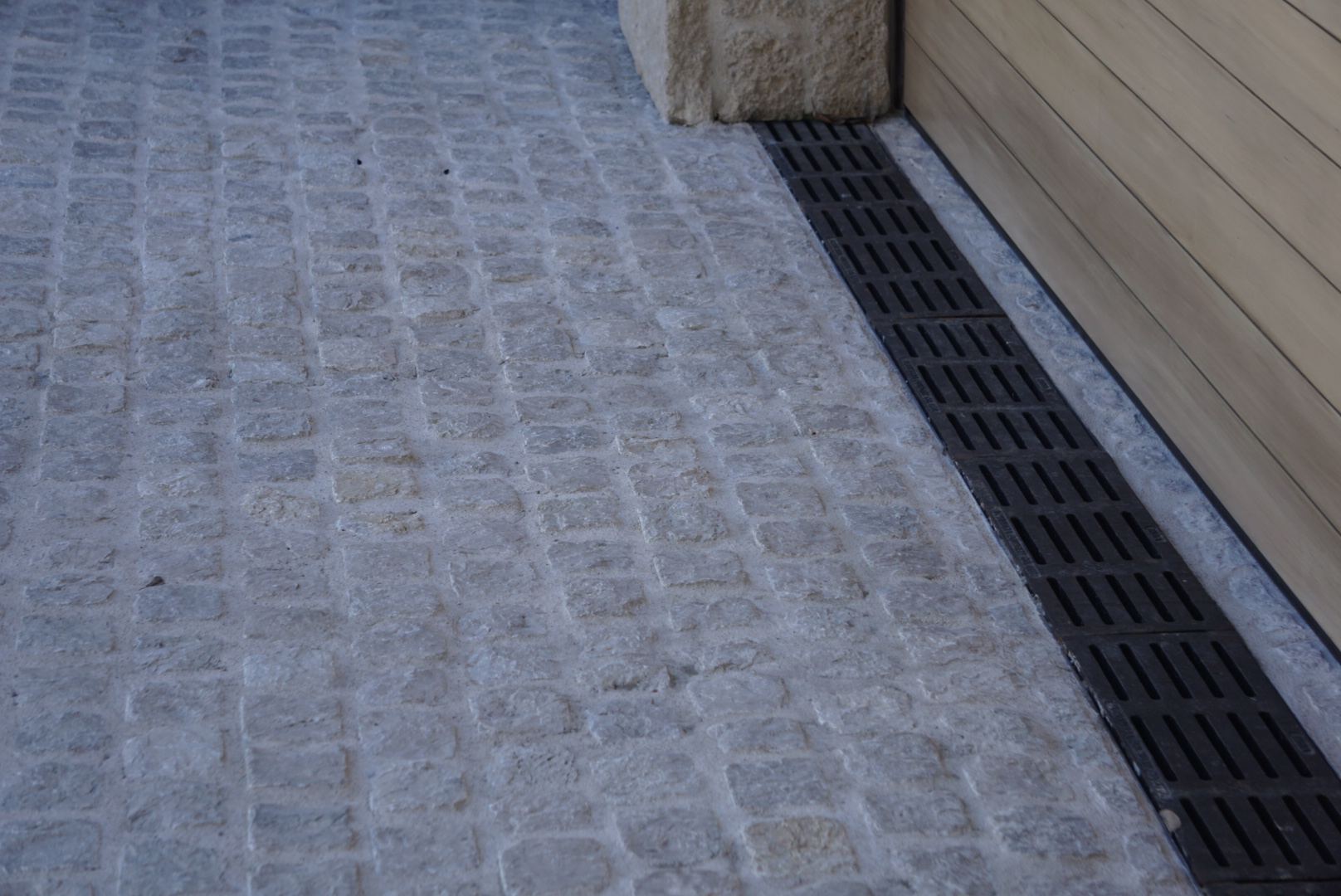
What Affects the Cost of a French Drain
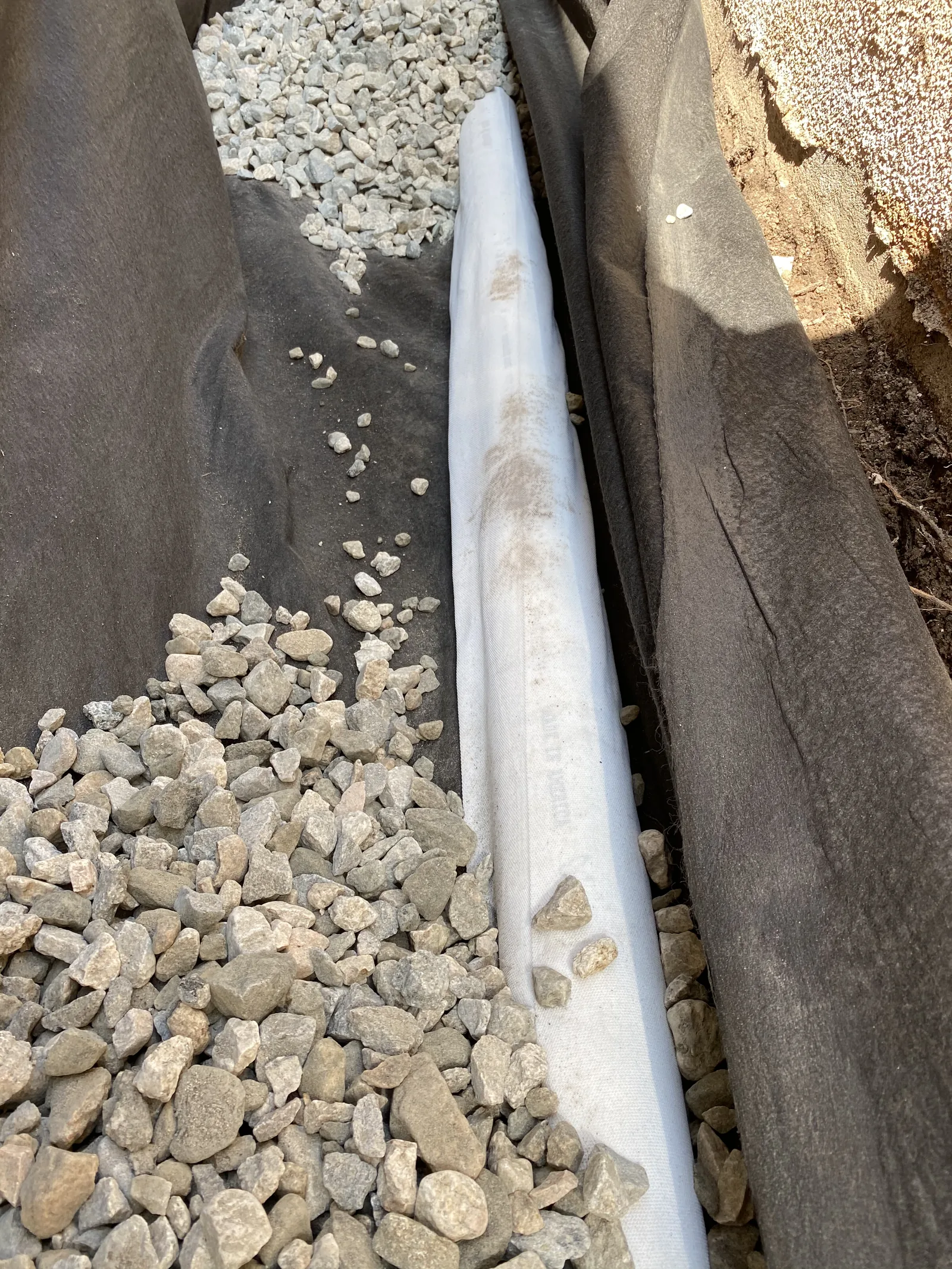
A French drain is priced after we walk your property, not from a number on a page. The work itself is straightforward — a sloped trench, gravel, perforated pipe, filter fabric and a safe place for the water to go — but the details of your yard change the scope.
What usually affects the price:
- Length and depth. A short drain in a lawn is a different job from a deeper run along a foundation, or a long run down a side yard.
- Where the water can go. A drain only works if it has a legal, lower outlet. That may be a discharge toward the street, a solid pipe to a catch basin, or another outlet we can confirm on site. We will not pipe water onto a neighbor’s lot.
- What the trench has to cross. Open planting is simpler to open and put back than a paver patio, a concrete walk, or a tight side yard with tree roots.
- Soil and access. Heavy clay and tight access slow the work. Many Southern California yards have both.
- Putting the surface back. The estimate should include how we close the trench — soil and planting, or rebuilding hardscape we had to cut.
Projects start at $3,500. After an onsite visit we give you a clear written estimate. Your free design rendering can show where a French drain, a trench drain, or a grade change would go.
Can a French Drain Be Repaired?
Sometimes. If an existing drain is clogged with silt or roots, or the outlet is blocked, we may be able to clear it or replace a section. If it was installed without filter fabric, without enough slope, or without a real outlet, a repair will not fix it and the drain should be replaced.
We look at the existing pipe and outlet during a free onsite visit and tell you which one it is before any work starts. Licensed & insured, CSLB #1049202.
Frequently Asked Questions
How do I know if I need a French drain?
If water pools in the same spots after rain, your lawn stays soggy, or water runs toward your foundation, a drain or regrading usually helps. A French drain is the right tool when the soil stays wet after the visible puddles are gone — that is water moving through the ground, not just across the top. If you can see water running over the yard or pooling on a driveway, the first fix is often a grade change or a trench drain, and some yards need both. We’ll check during a free onsite visit.
What’s the difference between a trench drain and a French drain?
A trench drain is a grated channel set flush in a driveway, patio or other hard surface. It catches water running across the top. A French drain is a gravel-filled trench with perforated pipe that collects water in the soil, underground. Many yards need both. We’ll show you where each one goes in your free design rendering.
How much does a French drain cost in Los Angeles or Orange County?
There is no honest per-foot number that fits every yard. Length, depth, access, soil, what the trench has to cross, and where the water can legally go all change the scope. Projects start at $3,500. After we visit your property we give you a written estimate, and the free design rendering shows the plan before we start.
Can a French drain be repaired instead of replaced?
Often we can clear a clog or replace a damaged section if the drain was built with a proper slope, fabric and outlet. If those pieces were skipped, or the pipe has collapsed, replacement is the better fix. We will tell you which one applies after we look at the drain on site.
Can you add a drain to my existing driveway?
Usually, yes. We cut a channel and install a linear trench drain tied to a safe outlet. If you are already planning a new paver, cobblestone or concrete driveway, it is cleaner to build the drain in from the start.
What should I do if water pools at my garage after rain?
That is usually surface water, so the fix is often a trench drain at the garage or at the low end of the driveway, not a French drain alone. We can add a drain to the existing slab, or build one into a new paver or cobblestone driveway. Book an onsite look and we will show you where the water should go.